Welcome to visit Jiangmen Qianfeng Packaging Materials Co., Ltd.
Blog
Below are some common sense about foam packaging boxes and basic customization issues
Release time:2022-11-07
Below, we will discuss some common knowledge about foam packaging boxes and basic customization issues.
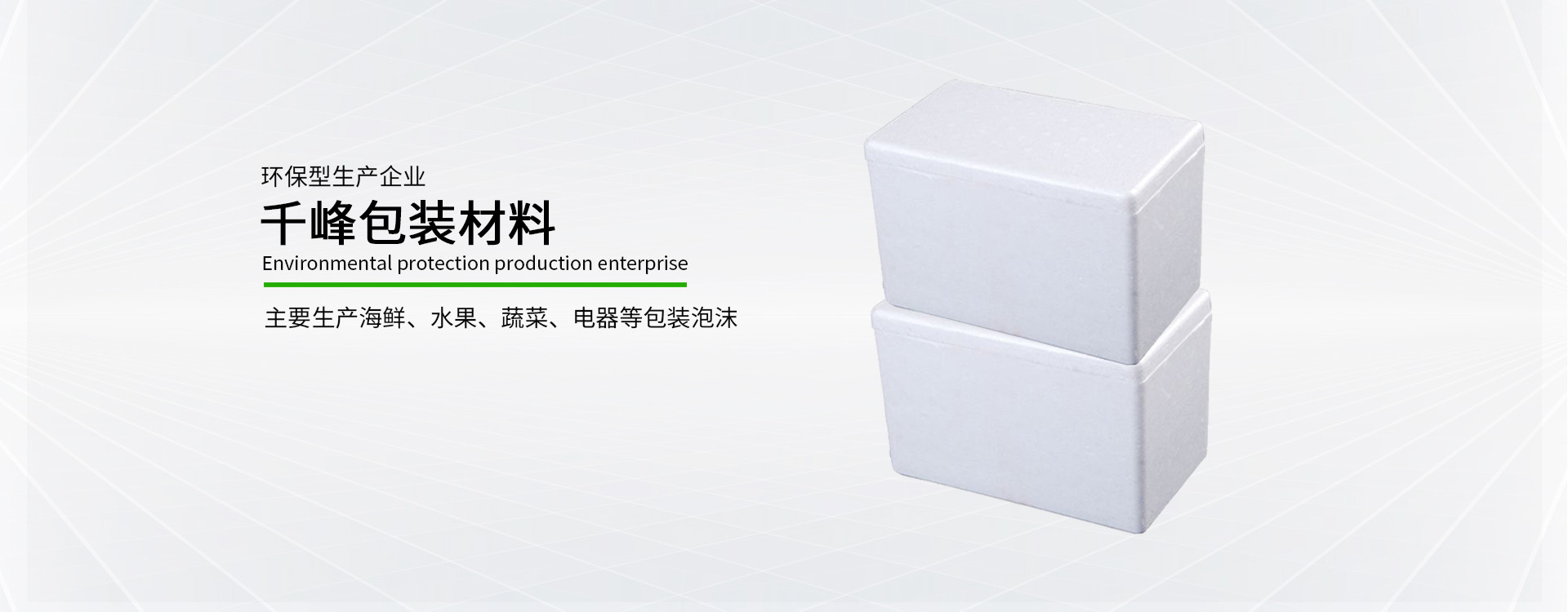
Foam packaging boxes are mainly used for product packaging. They can provide excellent protection and attractive packaging for goods, facilitating transportation without damaging the products and enhancing the value of the company's products. Therefore, Jinan foam box factories believe that they can be used in various places and industries.
Structural characteristics of foam packaging boxes. The commonly mentioned foam boxes are differentiated by the number of layers of corrugated paper foam, such as 3-layer, 5-layer, and 7-layer, which determines the strength of the foam box. Starting from the surface layer, it consists of the face foam, corrugated paper foam formed into a wave shape, core foam, and liner foam, bonded together. According to the needs of product packaging, single-layer corrugated paper foam board, three-layer corrugated paper foam board, five-layer corrugated paper, seven-layer corrugated paper, and eleven-layer corrugated paper can be produced, with eleven-layer corrugated paper being less common.
Several popular types worldwide are categorized as A, B, C, and E, mainly differing in the wave patterns, resulting in different properties of the bonded foam boards. Similarly, the face foam and liner foam show significant differences due to the different flute shapes: A-flute foam boards have stronger cushioning and elasticity; B-flute has a high density, resulting in a smoother surface and high compressive strength, suitable for printing; C-flute is inferior to A-flute but has better tensile strength and impact resistance than A-flute; E-flute, due to its thin and dense structure, exhibits high compressive strength.
Basic Issues in Customizing Foam Packaging Boxes
1. Dimensions of Foam Packaging Boxes
Generally, for three-layer foam boxes, the thickness is set to around 3.5mm, while for five-layer boxes, it's around 7mm. The dimensions are designed by first measuring the relevant specifications of the object to be stored, and then adding the thickness of the foam board to obtain the overall dimensions. This results in the outer dimensions of the foam box. When ordering, it's crucial to clearly inform the manufacturer whether you need the inner or outer dimensions.
2. Material of Foam Packaging Boxes
When customizing foam boxes, the material should be chosen rationally based on the weight of the product and cost requirements. Foam boxes are made of foam boards, which are composed of face foam, corrugated foam, and liner foam. The quality of the materials affects the properties of the foam box, so careful selection is necessary.
3. Thickness Selection of Foam Boxes
Foam packaging boxes have different flute types, categorized as A, B, C, D, E, F, etc., with different compositions. A-flute has a high flute height; the higher the flute height, the better the shock resistance.
4. Printing of Foam Packaging Boxes
Generally, the larger the printing area, the higher the cost. The cost also depends on the color scheme. Once printing begins, changes are difficult, so it's essential to confirm with the manufacturer beforehand to avoid errors.
Foam packaging
Related News
Contact Us
Tel:86-750-6230787
Address:Meige Village, Shadui Town, Xinhui District, Jiangmen City, Guangdong, China
Contact Person:Mr. Deng

Website
Copyright © 2025 Jiangmen Qianfeng Packaging Materials Co., Ltd.
Powered by www.300.cn Privacy Policy SEO Tags